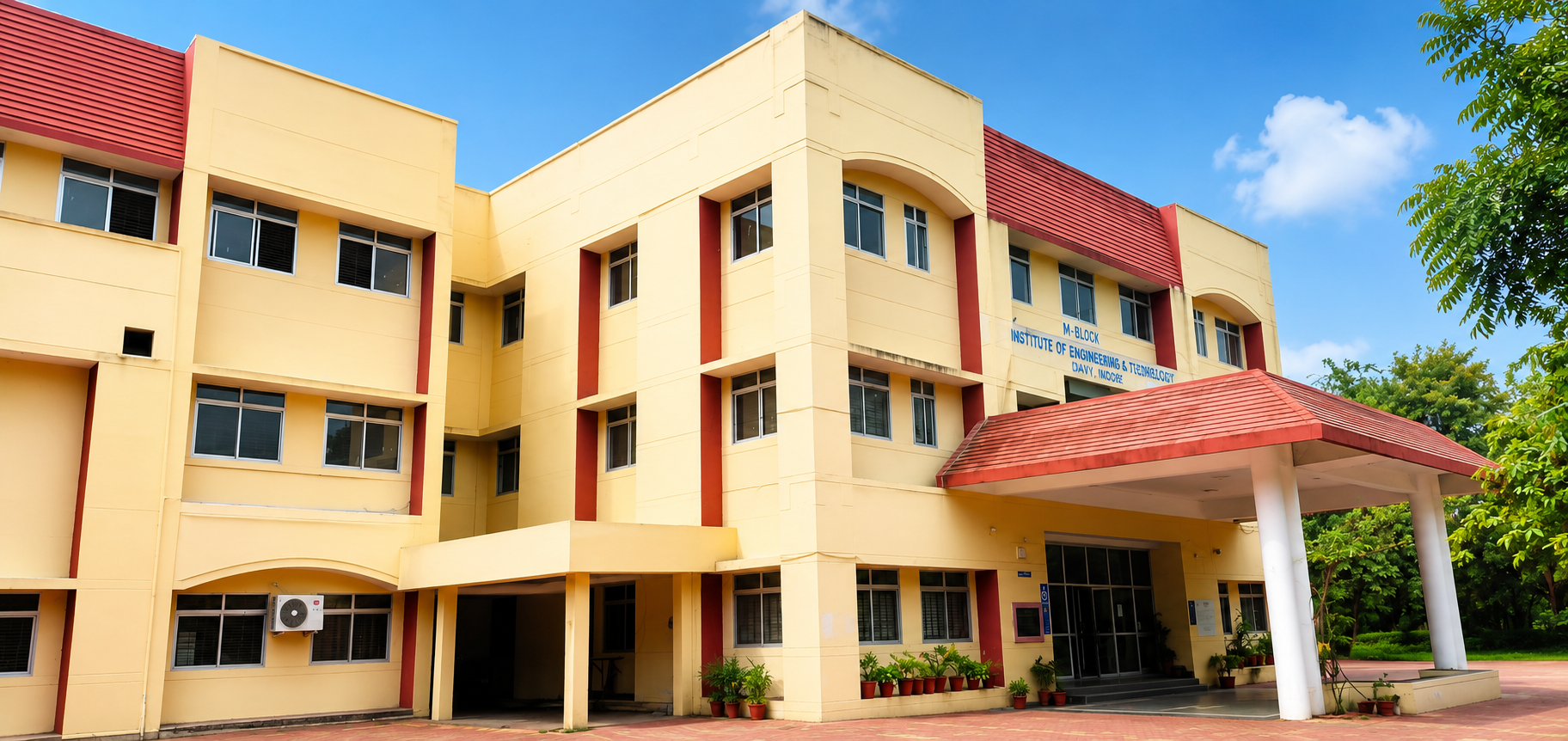
Indore, October 12, 2026: Researchers Piyush Talreja and Shaurya Jain have developed an innovative robotics learning project at the DAVV Innovation Centre, Devi Ahilya Vishwavidyalaya (DAVV), Indore. The initiative aims to make robotics education more practical, accessible, and engaging by enabling students to explore hardware development, programming, sensors, and intelligent robotic systems through hands-on experimentation.
Introducing 'Origin One' and 'Advanced Vision Shield'
The researchers have developed a robotic platform named 'Origin One', along with an advanced vision-based component called 'Advanced Vision Shield'. The project integrates electronic hardware, sensors, control systems, and robotic components to provide learners with opportunities to explore the fundamentals of robotics, automation, and intelligent systems.
The robotic platform is designed to support experimentation with different configurations and applications. Its modular architecture allows students to modify hardware components and explore various robotic functionalities according to their learning requirements. The integration of vision-based capabilities further introduces learners to emerging areas of robotics and intelligent sensing.
Practical Learning Beyond Textbooks
A key objective of the project is to bridge the gap between theoretical knowledge and practical implementation. Instead of relying exclusively on textbook-based instruction, students can assemble, configure, program, and test robotic systems themselves. This approach encourages experimentation, problem-solving, creativity, and independent learning.
The project emphasises the importance of hands-on experience in understanding complex engineering concepts. By working with electronic circuits, sensors, motors, and control mechanisms, students can develop a stronger foundation in robotics and embedded systems. The platform is intended to help learners understand how individual hardware components work together to create a functional robotic system.
Focus on Healthcare and High-Risk Applications
One of the promising aspects of the initiative is the potential application of robotics in healthcare and hazardous environments. The researchers envision the use of robotic systems in areas where direct human intervention may be difficult or risky, including hospital isolation wards and locations requiring remote monitoring.
Such applications could support the development of robotic solutions for inspection, monitoring, and other specialised tasks. The project highlights how accessible robotics platforms can serve as a starting point for exploring technologies that address real-world challenges, particularly in environments where reducing direct human exposure is important.
Encouraging Innovation and Skill Development
The initiative promotes a project-oriented approach to technical education, encouraging students to develop their own robotic solutions rather than merely study existing designs. The modular nature of the platform can help learners experiment with different configurations and gradually progress towards more advanced applications.
It also underlines the growing importance of interdisciplinary skills involving electronics, programming, mechanical design, sensor integration, and system control. These competencies are increasingly valuable in emerging fields such as automation, intelligent manufacturing, healthcare technology, and robotics research.
By encouraging students to move from conceptual understanding to prototype development, the initiative can foster a culture of innovation, teamwork, and technical problem-solving. It also provides an opportunity for aspiring engineers to explore how their ideas can be translated into practical technological solutions.
A Step Towards Experiential Engineering Education
The development by Piyush Talreja and Shaurya Jain reflects the growing importance of innovation-driven and experiential learning in engineering education. By providing opportunities to build and experiment with robotic systems, initiatives of this kind can inspire students to transform their ideas into functional prototypes and explore new possibilities in intelligent automation.
The project demonstrates how accessible, hands-on robotics platforms can nurture technical confidence, encourage research-oriented thinking, and prepare learners to participate in the rapidly evolving fields of robotics, embedded systems, and intelligent automation.
Through their work, the researchers highlight the value of practical experimentation in developing future-ready technical skills and encouraging students to pursue innovative solutions to real-world engineering challenges.