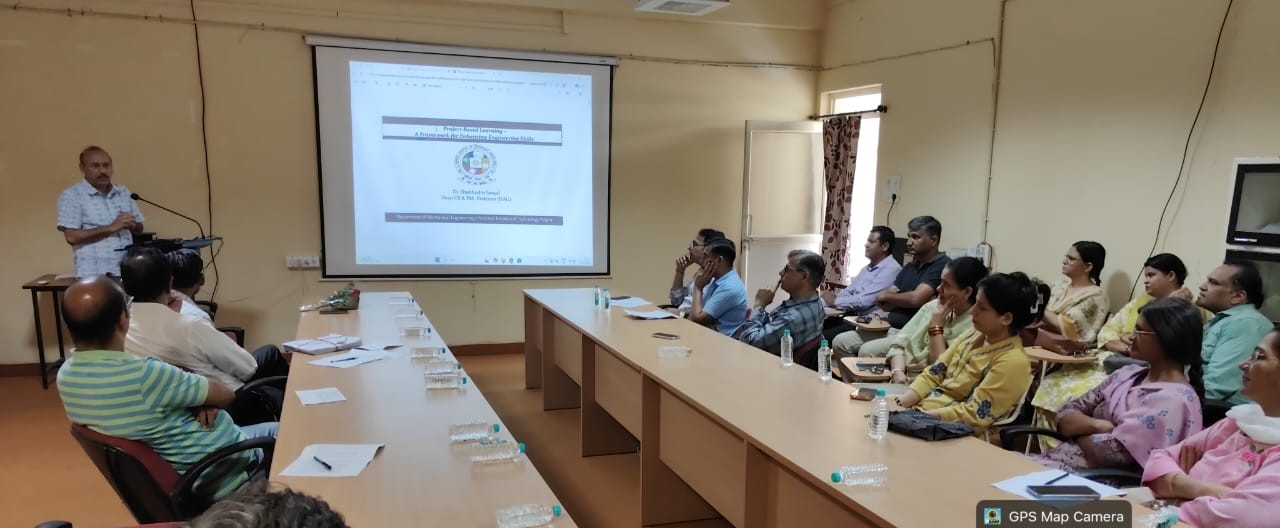
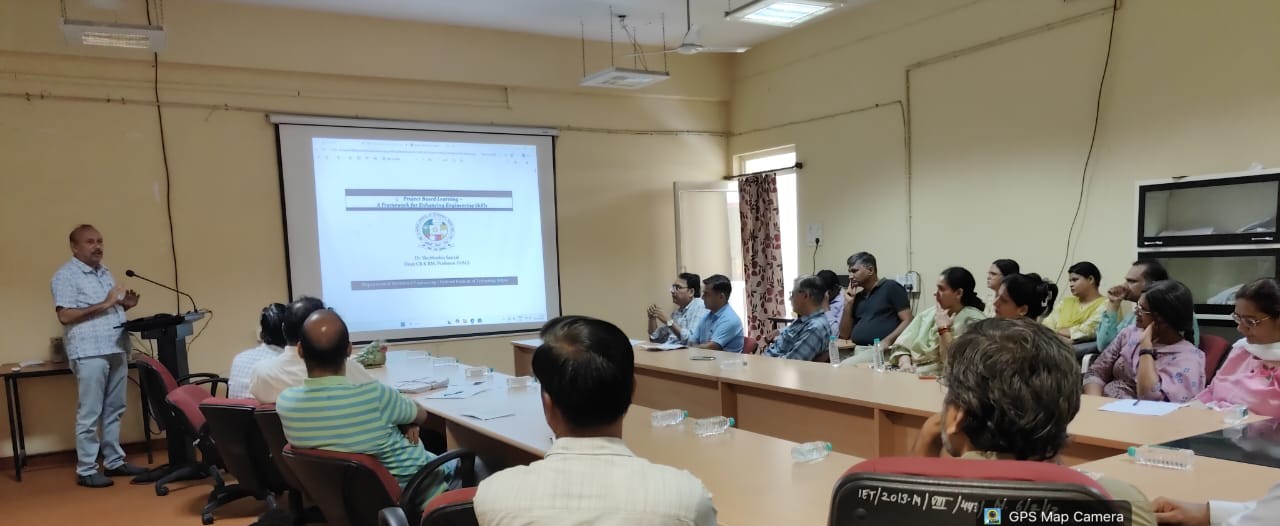
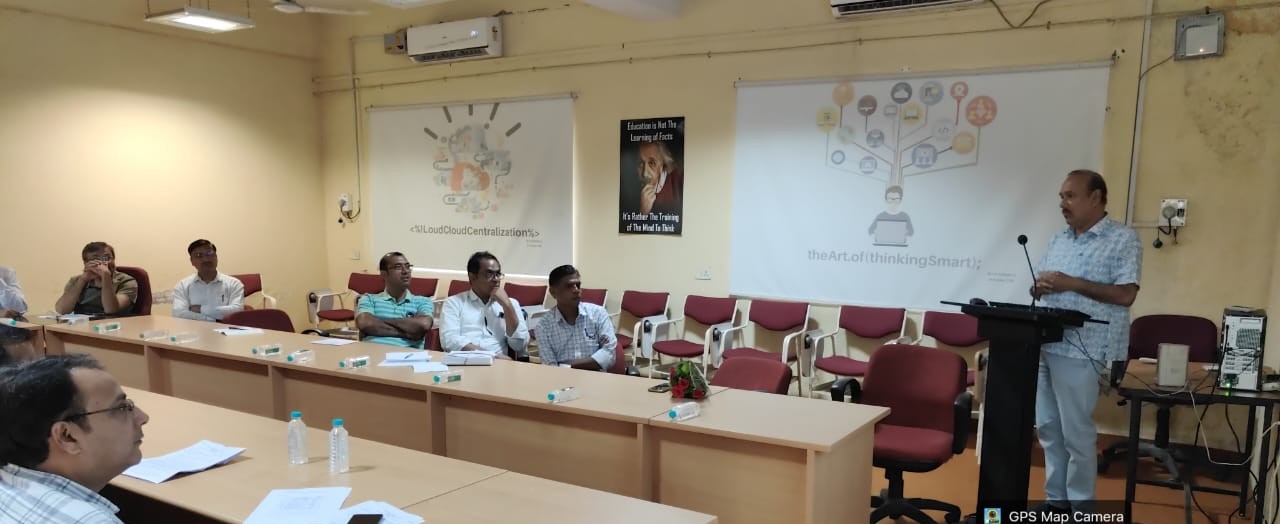
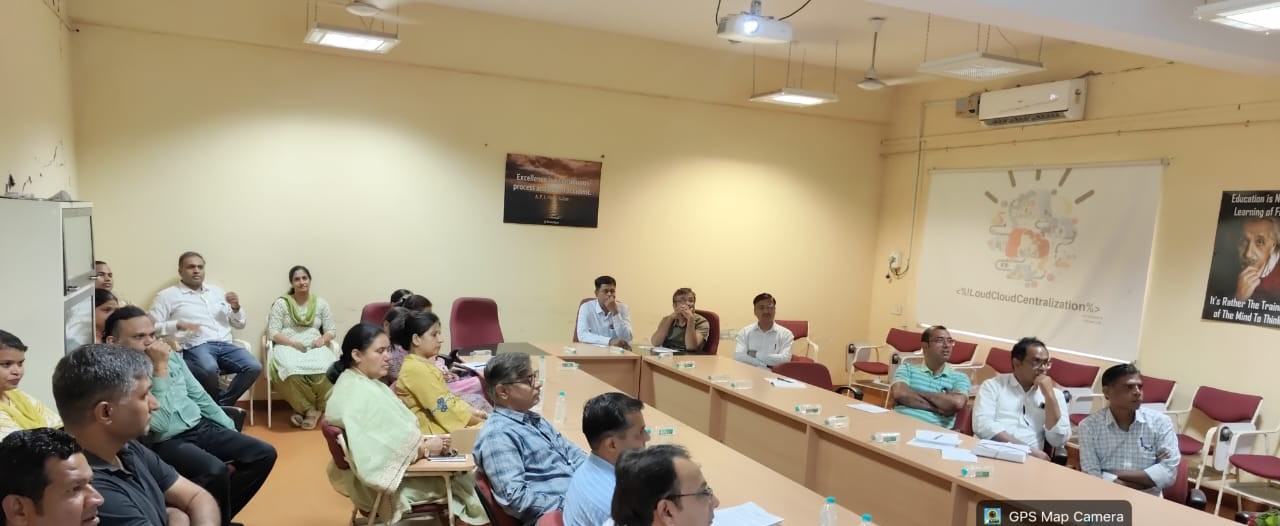
Dr. Sanyal, an accomplished academician with over three decades of teaching, research, and academic administration experience, shared his extensive expertise on the significance of integrating Project-Based Learning (PBL) into engineering curricula. Throughout his distinguished career at NIT Raipur, he has served in several key academic and administrative positions, including Head of Department, Dean (Research & Consultancy), TEQIP Coordinator, Chief Warden, Registrar In-Charge, and several other leadership roles.
Addressing the participants, Dr. Sanyal emphasized that Project-Based Learning is a student-centric educational approach that enables learners to acquire knowledge and technical competencies by working on real-world challenges. He highlighted that PBL bridges the gap between classroom theory and industrial practice, fostering critical thinking, creativity, innovation, collaboration, and problem-solving abilities among engineering students.
The lecture provided a comprehensive overview of the complete project development cycle, including problem identification, literature survey, planning, design, implementation, testing, validation, and evaluation. Dr. Sanyal stressed the importance of effective teamwork, communication, documentation, and time management in successfully executing engineering projects. He encouraged students to undertake projects that address practical societal and industrial challenges while contributing to sustainable technological development.
Highlighting the evolving role of educators, Dr. Sanyal noted that faculty members should serve as mentors and facilitators who guide students throughout their learning journey rather than merely delivering classroom lectures. He explained that project-based teaching nurtures independent learning, leadership qualities, decision-making skills, and professional competence, making graduates better prepared for industry as well as higher education and research.
The expert also shared inspiring examples of successful engineering projects and discussed the growing importance of interdisciplinary collaboration, emerging technologies, and continuous assessment in enhancing learning outcomes. Students were encouraged to actively participate in technical competitions, innovation challenges, research initiatives, and industry-sponsored projects to gain practical exposure and strengthen their professional skills.
The session concluded with an engaging interactive discussion during which students sought guidance on project selection, implementation strategies, innovation, and career opportunities. Responding to their queries, Dr. Sanyal encouraged students to view academic projects not merely as curriculum requirements but as opportunities to develop innovative solutions to real-world problems and build industry-ready competencies.
The lecture proved to be highly informative and inspiring, reinforcing the importance of experiential learning in engineering education. The Department of Mechanical Engineering, IET DAVV, continues to organize such academic interactions to expose students to contemporary educational practices and prepare them to meet the evolving demands of the engineering profession.